
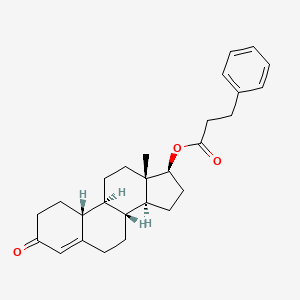
Nandrolone Phenylpropionate (NPP): The Complete 2026 Evidence-Based Guide for Bodybuilders
In the pursuit of formidable muscle mass and accelerated recovery, the anabolic steroid nandrolone phenylpropionate (NPP) has carved out a significant niche, particularly among athletes seeking the benefits of its longer-estered cousin, Deca-Durabolin, but with greater control and faster clearance. A 2021 review in the Journal of Clinical Endocrinology highlighted nandrolone's unique anabolic to androgenic ratio and its historical medical use for muscle-wasting conditions, underscoring its potent tissue-building capabilities. This guide delivers a comprehensive, medically-aware examination of nandrolone phenylpropionate, separating the evidence from the anecdote to provide a crucial resource for anyone in the fitness community considering its use.
Table of Contents
- What Is Nandrolone Phenylpropionate?
- Pharmacology: How NPP Works in the Body
- NPP vs Deca: The Critical Ester Difference
- NPP Benefits and Expected Results
- Nandrolone Phenylpropionate Side Effects & Risk Management
- NPP Cycles and Dosage Guidelines
- Post Cycle Therapy (PCT) After NPP
- Legal and Health Risk Disclosures
- Frequently Asked Questions (FAQ)
- Conclusion and Final Recommendations
| Property | Detail |
|---|---|
| Main Keyword | Nandrolone Phenylpropionate |
| Common Name | NPP steroid |
| Ester | Phenylpropionate (Short-Acting) |
| Half-Life | ~2-3 days (NPP half-life) |
| Primary Use | Bulking, Lean Mass, Joint Relief |
| Key Consideration | Requires frequent injection; Prolactin management often needed. |
What Is Nandrolone Phenylpropionate? Beyond the "NPP Steroid" Label
To understand what is NPP, we must first look at its parent compound, nandrolone. Nandrolone is a 19-nortestosterone derivative, meaning it lacks a carbon atom at the 19th position compared to testosterone. This simple alteration reduces its androgenic (masculinizing) potency while preserving, and in some contexts enhancing, its anabolic (muscle-building) properties. The compound itself was originally developed for legitimate medical purposes, such as treating osteoporosis and anemia, due to its ability to stimulate red blood cell production and increase bone density.
The "phenylpropionate" attached to its name refers to the ester chain. An ester controls the release rate of the active hormone from the injection site. Nandrolone phenylpropionate is the fast-acting version, while nandrolone decanoate (Deca-Durabolin) is the slow-acting counterpart. This distinction is not merely academic, it fundamentally changes the practical application of the drug for performance enhancement. In gym parlance, when someone asks for NPP, they are specifically requesting this shorter-estered, quicker-in, quicker-out version of nandrolone.
The Historical and Medical Context
Nandrolone compounds have a long history in medicine. Decades before bodybuilders prized them for size, doctors prescribed them to combat muscle wasting in HIV/AIDS patients, severe burns, and certain types of anemia. This medical pedigree provides a foundation of clinical data on its effects, albeit at doses far lower than those used in bodybuilding. It reminds us that these are potent endocrine agents with systemic effects, not simple "muscle supplements."
Pharmacology: How Nandrolone Phenylpropionate Works in the Body
The mechanism of action of nandrolone phenylpropionate is similar to other anabolic androgenic steroids (AAS) but with notable nuances. Its primary pathway is direct binding to the androgen receptor (AR) within muscle cells. This binding triggers a cascade of genetic expression that increases protein synthesis, the fundamental process of building new muscle tissue. It also antagonizes glucocorticoid receptors, the hormones like cortisol that break down muscle, creating a powerful anticatabolic environment.
However, nandrolone's metabolism sets it apart. It exhibits a very low rate of conversion to dihydrotestosterone (DHT) via the 5-alpha-reductase enzyme, which is why androgenic side effects like hair loss and prostate enlargement are less common. Conversely, it can convert to estradiol (estrogen) via aromatase, but at a rate estimated to be about 20% that of testosterone. This leads to a critical point: while estrogenic side effects like water retention and gynecomastia are possible, they are often less pronounced than with testosterone. The more significant hormonal concern with nandrolone is its direct and indirect potential to elevate prolactin, a hormone associated with lactation and sexual dysfunction.
The nandrolone ester choice dictates kinetics. The phenylpropionate ester provides a rapid spike in hormone levels, requiring a NPP injection frequency of every other day (EOD) or at minimum three times per week to maintain stable blood levels. This is in stark contrast to decanoate's weekly injection schedule. The shorter NPP half-life means the compound reaches peak concentration faster and clears the system more rapidly, offering users more control and the ability to adjust or terminate a cycle with less lag time.
NPP vs Deca: The Critical Ester Difference
The debate of NPP vs Deca is central for any athlete considering nandrolone. Both deliver the same active hormone, but the ester changes the user experience dramatically.
| Feature | Nandrolone Phenylpropionate (NPP) | Nandrolone Decanoate (Deca) |
|---|---|---|
| Ester Length | Short (Phenylpropionate) | Long (Decanoate) |
| Half-Life | ~2-3 days | ~7-12 days |
| Injection Frequency | Every Other Day (EOD) recommended | Once per week typical |
| Time to "Kick In" | 7-10 days | 3-4 weeks |
| Water Retention | Generally less pronounced | More common, "smoother" look |
| Control & Side Effect Management | High: Faster clearance allows quicker response to issues. | Low: Side effects can linger for weeks after last pin. |
| Best For | Shorter cycles, those sensitive to water retention, first-time nandrolone users. | Long, slow bulks, off-season mass, experienced users comfortable with long esters. |
The prevailing wisdom is that NPP causes less water retention than Deca. This is largely attributed to the ability to maintain more stable blood levels with frequent injections, reducing peaks that can exacerbate estrogenic activity. For the athlete wanting quality, lean tissue gains with a drier appearance, nandrolone phenylpropionate often becomes the preferred choice.
NPP Benefits and Expected Nandrolone Phenylpropionate Results
When implemented correctly within a disciplined training and nutrition framework, the npp benefits can be substantial. Users report a distinct set of advantages that make it a favorite for both bulking and recomp phases.
- Quality Muscle Growth: Unlike some bulking agents that promote sheer water and glycogen weight, NPP is renowned for adding dense, keepable muscle tissue. The nandrolone phenylpropionate results often include noticeable increases in shoulder, chest, and back thickness over an 8–12 week period.
- Significant Strength Increases: Enhanced protein synthesis and nitrogen retention lead to concrete strength gains, allowing for progressive overload in the gym.
- Enhanced Recovery: This is one of the most praised effects. Joint pain dissipates, soreness fades faster, and training frequency can increase. The mechanism is believed to be related to increased collagen synthesis and synovial fluid, making NPP good for joint pain a commonly cited benefit.
- Improved Anabolic Environment: Its strong anticatabolic effect helps preserve muscle during calorie-restricted diets, making it viable for cutting cycles, though it is most famous for npp for bulking.
- Favorable Side Effect Profile (Relative): Compared to more androgenic compounds, users experience less hair loss, oily skin, and aggression. The manageable estrogen conversion, when monitored, reduces the risk of severe bloating.
Nandrolone Phenylpropionate Side Effects & Risk Management
No discussion is complete without a rigorous examination of the potential downsides. The nandrolone phenylpropionate side effects are a real and present danger, especially when protocols are ignored.
| Category | Specific Side Effects | Management / Prevention |
|---|---|---|
| Endocrine | Suppressed natural testosterone production, elevated prolactin, altered estrogen levels. | Use a testosterone base. Have Cabergoline or Prami on hand. Use Aromatase Inhibitors (AIs) like Anastrozole if needed. |
| Cardiovascular | Increased LDL ("bad") cholesterol, decreased HDL ("good") cholesterol, elevated blood pressure, potential for heightened red blood cell count. | Regular cardio, omega-3 fatty acids, healthy fats, monitoring BP, blood donation if hematocrit is high. |
| Androgenic | Acne, accelerated male pattern baldness (in those predisposed), body hair growth. (Note: Less severe than testosterone). | Topical treatments, 5-alpha reductase inhibitors (like Finasteride) are NOT recommended as they may worsen side effects with nandrolone. |
| Prolactin-Related | Lactation (in men and women), sexual dysfunction (libido loss, erectile dysfunction), post-cycle emotional sensitivity. | This is key: Manage prolactin issues on an NPP cycle with dopamine agonists like Cabergoline if bloodwork confirms high prolactin. Avoiding excessive estrogen also helps. |
| Other | Injection site pain (PIP), virilization in women (deep voice, clitoral enlargement), sleep disturbances. | Ensure sterile technique, consider shorter needles for shallow IM. Women must use extreme caution with low doses. |
A critical and often misunderstood question is: Does nandrolone phenylpropionate convert to estrogen? Yes, it does aromatize, but at a significantly lower rate than testosterone. However, its metabolite, estradiol, can still cause issues. More critically, nandrolone itself can stimulate progesterone receptors and directly/indirectly elevate prolactin, which mimics some estrogenic side effects. This is why managing estrogen with an AI alone may not resolve all issues, and prolactin must be monitored.
NPP Cycles and Dosage Guidelines: A Framework for Safety
Providing explicit dosing instructions is irresponsible. Instead, we will outline common frameworks reported in community experiences and emphasize the non-negotiable need for medical supervision and bloodwork. A typical NPP dosage for bulking in male users often ranges between 300mg to 600mg per week, split across multiple injections due to the short ester. For a first cycle, the lower end of this range is strongly advised to assess individual tolerance.
Should I use testosterone with NPP? The answer is an unequivocal yes. Nandrolone, like all anabolic steroids (except mild compounds like Anavar), will suppress your body's natural testosterone production. Without a testosterone base, you will experience symptoms of hypogonadism: low libido, depression, fatigue, and loss of gains. A common approach is to run a TRT dose (e.g., 150-200mg per week) of Testosterone Enanthate or Cypionate alongside the NPP.
Example Cycle Framework (Educational Purpose Only)
- Duration: 10-12 weeks. The shorter ester allows for effective shorter cycles.
- NPP Dose: 400mg per week (e.g., 150mg injected every other day).
- Testosterone Base: 300mg per week (e.g., Test E at 150mg twice weekly).
- Ancillaries on Hand: Anastrozole (for high estrogen symptoms confirmed by bloodwork), Cabergoline (for high prolactin symptoms confirmed by bloodwork).
- Support Supplements: Fish oil, CoQ10, NAC for liver/antioxidant support, a comprehensive multivitamin.
How long does it take for NPP to kick in? Users typically report "feeling" the effects—notably improved recovery and joint lubrication—within 7-10 days. Visible muscle fullness and strength gains become more apparent by the end of the second week.
What is the best cycle for a nandrolone phenylpropionate beginner?
For a true beginner to AAS, a testosterone-only cycle is widely recommended to understand how your body reacts. However, for a beginner to nandrolone specifically, a simple stack of low-dose Testosterone (300-400mg/week) with low-dose NPP (300mg/week) for 10 weeks provides a manageable introduction. The cornerstone is bloodwork: before, during (around week 5-6), and after.
Post Cycle Therapy (PCT) After NPP
Due to its shorter ester, nandrolone phenylpropionate clears the system faster than Deca, allowing for a sooner start to Post Cycle Therapy. However, the hypothalamic-pituitary-testicular axis (HPTA) will still be suppressed. What is the best Post Cycle Therapy (PCT) after NPP? A standard PCT protocol involves Selective Estrogen Receptor Modulators (SERMs) like Clomiphene (Clomid) and/or Tamoxifen (Nolvadex) to stimulate the pituitary gland to produce LH and FSH, which in turn jumpstart the testes.
A typical PCT might begin 7-10 days after the last NPP injection and last 4-6 weeks. Example: Tamoxifen 20mg/day for 6 weeks, with Clomid at 50mg/day for the first two weeks, then 25mg/day for two weeks. This is a general example, not medical advice. PCT should be tailored based on pre-cycle hormone levels and the intensity/duration of the cycle. The use of HCG (Human Chorionic Gonadotropin) during the cycle or in the "blast" phase before PCT is a common strategy to maintain testicular size and function, potentially leading to a smoother recovery.
Legal and Health Risk Disclosures: A Necessary Reality Check
In the United States and many other countries, nandrolone phenylpropionate is classified as a Schedule III controlled substance under the Anabolic Steroids Control Act. Possession without a valid prescription is illegal and can result in significant fines and imprisonment. Furthermore, the underground market is rife with counterfeit, contaminated, or underdosed products, posing serious health risks.
What are the legal implications of buying nandrolone phenylpropionate? Purchasing it from an underground lab or overseas source without a prescription is a felony. Beyond legal jeopardy, you risk injecting unknown substances. The health risks of improper use include permanent endocrine dysfunction, cardiovascular damage, liver strain (though NPP is injectable and less hepatotoxic than orals), and psychological dependence.
Disclaimer: This article is for informational and educational purposes only. It does not constitute medical advice, nor does it endorse or promote the illegal use of controlled substances. The discussion of compounds, their effects, and hypothetical cycles is presented within the context of harm reduction and education for the informed adult audience. You must consult a licensed medical professional (an endocrinologist or TRT specialist) before starting or stopping any medication, therapy, or lifestyle modification. Bloodwork and medical supervision are non-negotiable for safety.
Frequently Asked Questions (FAQ)
What is the difference between Nandrolone Phenylpropionate and Decanoate?
The core difference is the ester attached. Phenylpropionate is a short ester requiring injections every other day and clears the body quickly. Decanoate is a long ester injected weekly and remains active for weeks. This makes NPP preferable for shorter cycles and easier side-effect management.
What are the most common Nandrolone Phenylpropionate side effects?
The most common include suppression of natural testosterone, potential for elevated prolactin (leading to sexual sides), negative cholesterol shifts, and androgenic effects like acne. Estrogenic sides like water retention are possible but less common than with testosterone.
How often do you need to inject Nandrolone Phenylpropionate?
Due to its short 2-3 day half-life, an NPP injection frequency of every other day (EOD) is ideal to maintain stable blood levels. Minimally, injections should occur at least three times per week.
Does NPP cause less water retention than Deca?
Generally, yes. The ability to maintain steadier blood levels with frequent injections and the quicker clearance of the ester often results in a drier, harder look compared to the smoother, fuller appearance from Deca.
Should I use testosterone with NPP?
Absolutely yes. NPP will suppress your natural testosterone production. A testosterone base (e.g., 150-300mg per week) is essential to maintain physiological function, libido, and well-being during the cycle.
How do you manage prolactin issues on an NPP cycle?
First, confirm high prolactin with bloodwork before treating. Management can include dopamine agonists like Cabergoline (0.25-0.5mg twice a week). Also, keeping estrogen in check is crucial, as high estrogen can stimulate prolactin.
Can women use Nandrolone Phenylpropionate?
It is possible but carries a high risk of virilization (permanent masculinization). If used, doses are extremely low (e.g., 25-50mg per week), and any sign of voice changes or clitoral enlargement warrants immediate discontinuation. Anavar is typically a safer first choice for women.
Is NPP good for joint pain?
Many users report significant relief from joint aches and improved recovery, likely due to increased collagen synthesis and fluid retention in the joints. This is one of its most valued therapeutic effects in bodybuilding.
Conclusion and Final Recommendations
Nandrolone phenylpropionate stands as a powerful tool in the advanced athlete's arsenal, offering a unique combination of quality muscle growth, enhanced recovery, and joint relief with a more manageable side-effect profile than many other bulking agents. Its shorter ester provides a level of control that makes it attractive for both novice and veteran users of nandrolone.
However, this power demands profound respect. The potential cardiovascular, endocrine, and legal risks are not trivial. The foundation of any responsible approach must be built on three pillars: extensive research (like you're doing now), comprehensive medical bloodwork, and professional guidance. Do not let the pursuit of a physical ideal compromise your long-term health.
If you are committed to exploring performance enhancement, ensure your source is legitimate and your focus remains on health-first harm reduction. For further reading on related compounds like Deca-Durabolin, Testosterone, or essential PCT Cycle Support products, continue your education with reliable resources. Your body's longevity is the ultimate trophy.
This educational resource was compiled using current scientific literature, including reviews from the Journal of Clinical Endocrinology & Metabolism and the Endocrine Society's guidelines on androgen use. Always verify information with up-to-date, authoritative sources.


Leave a Reply