
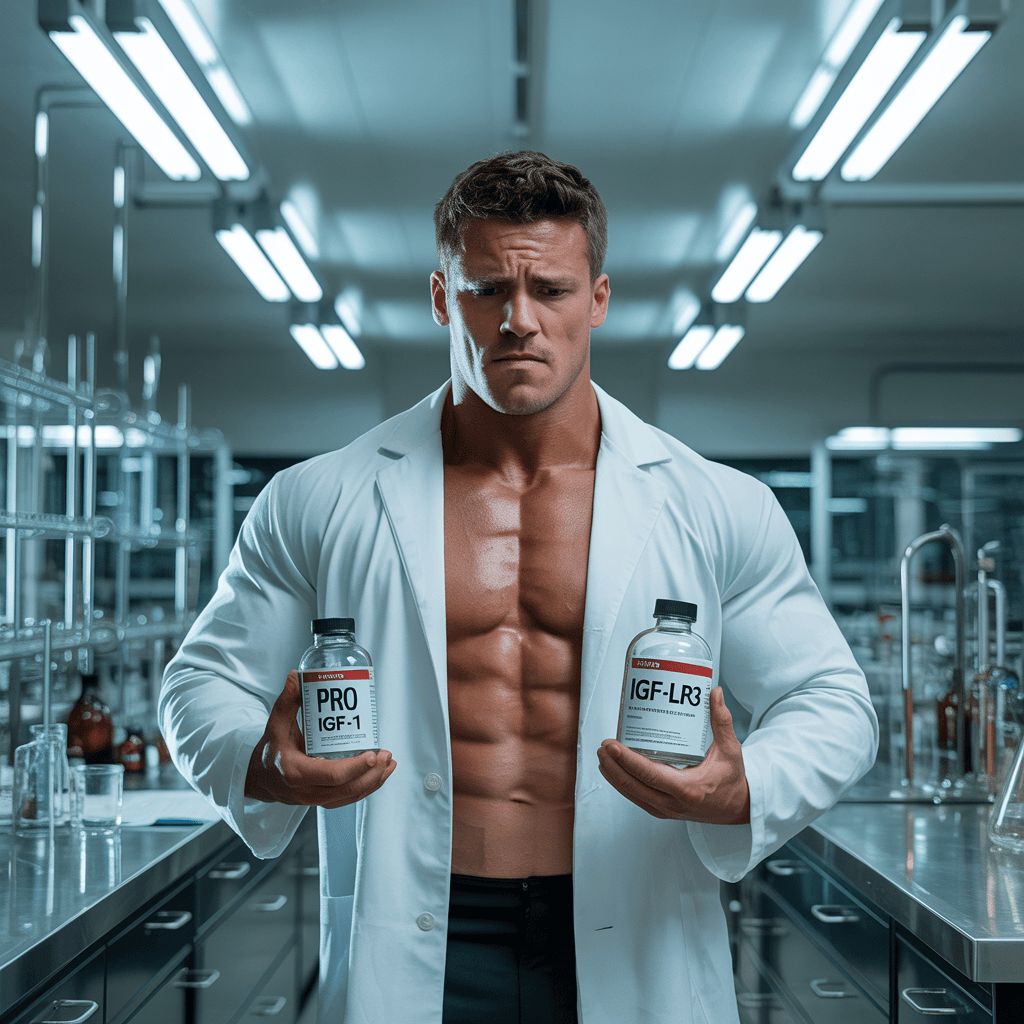
IGF-1 LR3 Benefits: The Ultimate Science-Backed Guide for Bodybuilders
In the relentless pursuit of the ultimate physique, where the margins for growth become vanishingly small, a long R3 analog of Insulin-like Growth Factor-1 has emerged from laboratory research as one of the most discussed and potent agents for triggering profound anabolic, anti-catabolic, and metabolic effects. This comprehensive guide strips away the hype to deliver a detailed, objective examination of IGF-1 LR3 benefits, its mechanisms, and the significant risks that accompany its research chemical status.
Table of Contents
- What is IGF-1 LR3? A Scientific Breakdown
- How IGF-1 LR3 Works: Hyperplasia, Hypertrophy & Nutrient Shuttling
- Purported IGF-1 LR3 Benefits for Bodybuilding
- IGF-1 LR3 vs IGF-1 DES: A Critical Comparison
- IGF 1 LR3 Dosage, Cycle, and Administration Protocols
- IGF 1 LR3 Side Effects: From Hypoglycemia to Cancer Risk
- Is IGF 1 LR3 Legal? Navigating the Research Chemical Gray Area
- Frequently Asked Questions (FAQ)
Quick Summary: IGF-1 LR3 at a Glance
| Aspect | Key Takeaway |
|---|---|
| What It Is | A synthetically modified, more potent and longer-lasting version of natural IGF-1, classified as a research peptide. |
| Primary Mechanism | Binds to IGF-1 receptors, directly stimulating muscle cell growth (hypertrophy & potential hyperplasia), nutrient uptake, and fat metabolism. |
| Core igf 1 lr3 benefits | Enhanced muscle growth, significant fat loss, improved recovery, and nutrient partitioning. igf 1 lr3 for muscle growth is a primary driver of interest. |
| Major Risks | Hypoglycemia, organ enlargement (including heart), potential cancer acceleration, and unregulated product quality. |
| Legal Status (USA, 2026) | Not FDA-approved for human use. Sale is for "research purposes only." Human consumption violates the Food, Drug, and Cosmetic Act. |
What is IGF-1 LR3? A Scientific Breakdown
To understand IGF-1 LR3, we must first look at its parent molecule. Endogenous Insulin-like Growth Factor-1 is a hormone produced primarily in the liver under the stimulation of Human Growth Hormone (HGH). It's a key mediator of growth throughout the body, particularly in skeletal muscle, bone, and cartilage. However, natural IGF-1 has a very short half-life (minutes) and is almost entirely bound to proteins (IGFBPs) in the bloodstream, which limit its bioavailability and activity.
IGF-1 LR3 is an engineered analog. The "LR3" denotes two critical modifications: an arginine substitution at position 3 and a 13-amino acid extension peptide at the N-terminus. These changes achieve two powerful effects. First, they drastically reduce the peptide's binding affinity for IGFBPs. Second, they extend its functional half-life in the body to an estimated 20-30 hours. The result is a "supercharged" version of IGF-1 that remains active, unbound, and circulating for a much longer period, magnifying its effects. It is crucial to recognize this compound as a research chemical, developed for in vitro and animal studies, not as a medicine for human performance.
The Core Mechanism: How This Peptide Exerts Its Effects
IGF-1 LR3 works by binding to the IGF-1 receptor (IGF-1R) on the surface of cells, much like a key fitting into a lock. This binding activates a complex cascade of intracellular signals, primarily through the PI3K/AKT and MAPK pathways. For the athlete, this translates into direct anabolic commands sent to muscle tissue. Unlike steroids that work through the androgen receptor, IGF-1 LR3 operates on a different, complementary pathway that can lead to both an increase in the size of existing muscle fibers (hypertrophy) and, according to some preclinical research, the formation of *new* muscle fibers (hyperplasia). This potential for hyperplasia is a holy grail in bodybuilding, as it suggests the ability to increase the actual number of muscle cells, not just their volume.
How IGF-1 LR3 Works: Hyperplasia, Hypertrophy & Nutrient Shuttling
The igf 1 lr3 benefits for physique enhancement are rooted in three interconnected biological actions.
1. Direct Stimulation of Muscle Growth (Hypertrophy & Hyperplasia)
Upon receptor activation, IGF-1 LR3 directly increases protein synthesis within muscle cells. It does this by activating mTOR, the master regulator of cell growth. Simultaneously, it inhibits protein breakdown. This dual action creates a powerfully positive nitrogen balance, the fundamental requirement for muscle growth. Furthermore, it stimulates the activation and proliferation of satellite cells, the stem cells of muscle tissue. This is the mechanism behind the theorized hyperplasia effect, where these activated satellite cells can fuse to form new myofibers. While conclusive evidence in humans is lacking, this potential is a central pillar of its appeal for advanced igf 1 lr3 for muscle growth protocols.
2. Nutrient Shuttling and Insulin-like Effects
As the name implies, IGF-1 has structural and functional similarities to insulin. IGF-1 LR3 can bind to insulin receptors, especially at high doses, and powerfully stimulate glucose uptake into cells, particularly muscle and fat cells. This has a dual consequence. First, it creates a profound nutrient-partitioning effect, pulling carbohydrates and amino acids into muscle tissue to fuel growth and recovery. Second, it dramatically increases the risk of hypoglycemia (dangerously low blood sugar), as glucose is rapidly cleared from the bloodstream. This nutrient shuttle is why timing meals and carbohydrates around administration is considered critical in anecdotal user protocols.
3. Enhanced Fat Loss (Lipolysis)
The same receptor activation in adipocytes (fat cells) promotes lipolysis, the breakdown of stored fat for energy. Combined with the increased metabolic rate from added muscle mass and the calorie-burning effects of hypoglycemia, this contributes to the significant fat loss often reported among users. The visual effect is one of a harder, more defined physique, making it attractive during cutting phases.
Purported IGF-1 LR3 Benefits for Bodybuilding
When discussing igf 1 lr3 results, it is vital to separate anecdotal reports from proven science. The following benefits are widely cited in biohacking and bodybuilding communities, but their magnitude and consistency in humans are not established by clinical trials.
- Superior Muscle Fullness and "3D Look": The nutrient-shuttling effect can lead to rapid increases in muscle glycogen and intracellular water, creating a pronounced full, round, and hard appearance. This is often one of the first noticeable effects.
- Accelerated Recovery: By reducing muscle damage and enhancing repair mechanisms at the cellular level, users report drastically reduced soreness and the ability to train the same muscle group more frequently with high intensity.
- Joint and Connective Tissue Repair: IGF-1 receptors are present in tendons and ligaments. Anecdotes suggest improved healing of nagging injuries, though this must be balanced against potential connective tissue overgrowth side effects.
- Significant Fat Reduction: Especially when combined with a calorie-controlled diet, the lipolytic action can lead to visible stripping of subcutaneous fat, enhancing vascularity and definition.
- Synergy with Other Compounds: Many stack IGF-1 LR3 with growth hormone, insulin, or anabolic steroids, believing it creates a synergistic effect where the whole is greater than the sum of its parts. For example, HGH stimulates natural IGF-1 production, which the exogenous LR3 analog then complements.
The collective pursuit of these igf 1 lr3 benefits fuels its popularity despite the risks.
IGF-1 LR3 vs IGF-1 DES: A Critical Comparison
Within the peptide space, IGF-1 DES (or Des (1-3) IGF-1) is the other major analog discussed. Understanding the difference is key for any enthusiast.
| Peptide | Key Feature | Half-Life | Primary Use Case in Lore | Binding to IGFBPs |
|---|---|---|---|---|
| IGF-1 LR3 | Long-acting, systemic effect | 20-30 hours | Daily systemic growth, fat loss, recovery. Used on both training and rest days. | Very low |
| IGF-1 DES | Short-acting, localized effect | Minutes | Site-specific "site enhancement" post-workout. Injected into a trained muscle for a localized pump and growth effect. | Extremely low/none |
In simple terms, igf 1 lr3 vs igf 1 des comes down to a choice between a long-lasting, whole-body anabolic agent and a short-lived, localized tool for targeting lagging muscle groups. IGF-1 LR3 is the choice for those seeking overall body composition changes.
IGF 1 LR3 Dosage, Cycle, and Administration Protocols
WARNING: The following is a synthesis of common practices reported in online communities for informational purposes only. It does not constitute medical or safe use advice. IGF-1 LR3 is a research chemical with no established safe human dosing protocol.
Typical reported igf 1 lr3 dosage ranges from 20mcg to 120mcg per day. Beginners often start at the very low end (20-40mcg) to assess tolerance, particularly to hypoglycemia. It is administered via subcutaneous injection. Due to its long igf 1 lr3 half-life, once-daily administration is standard. The timing debate often centers on pre-workout or post-workout. Post-workout administration is more common, leveraging the nutrient shuttle to feed recovering muscles, though some prefer pre-workout for the energy and pump, despite the higher hypoglycemia risk.
A common igf 1 lr3 cycle lasts 4 to 6 weeks, followed by an equal or longer period off to mitigate receptor desensitization. igf 1 lr3 reconstitution is a precise process, typically using acetic acid or bacteriostatic water, to prepare the lyophilized powder for injection. Improper reconstitution can render the peptide inert.
Stacking is prevalent. Common stacks include:
- With Human Growth Hormone (HGH) to amplify the IGF-1 pathway.
- With fast-acting insulin (extreme caution required due to compounded hypoglycemia risk).
- Within an anabolic steroid cycle to promote growth through multiple pathways.
IGF 1 LR3 Side Effects: From Hypoglycemia to Cancer Risk
The potency of IGF-1 LR3 comes with a serious and often understated risk profile. This is not a benign supplement.
| Risk Category | Specific Side Effects | Mechanism / Notes |
|---|---|---|
| Metabolic | Severe hypoglycemia, lethargy, sweating, shaking, loss of consciousness. | Due to potent insulin-like activity. Can be life-threatening if not managed with timely carbohydrate intake. |
| Organ Growth | Visceral organ enlargement (heart, kidneys, liver), acromegaly-like symptoms (jaw, hand, foot growth). | IGF-1 receptors are present in all tissues. Uncontrolled systemic stimulation causes growth everywhere, not just in skeletal muscle. This can lead to cardiomyopathy. |
| Oncogenic Potential | Acceleration of pre-existing cancerous or precancerous cell growth. | IGF-1 is a potent cell proliferator. The National Cancer Institute notes that high levels of IGF-1 are associated with increased risks of several cancers [1]. Using exogenous IGF-1 LR3 could theoretically fuel tumor growth. |
| Local & Miscellaneous | Injection site reactions, joint pain, headaches, igf 1 lr3 insulin sensitivity alterations (potentially leading to long-term dysfunction), and suppressed natural GH/IGF-1 production. | Quality control of research chemicals is a major issue, with risks of contamination or incorrect dosing. |
The question "Can IGF-1 LR3 cause cancer or organ growth?" must be answered with a resounding "yes, it is a significant theoretical and practical risk." The decision to use it involves playing biological roulette with these profound systemic effects.
Is IGF 1 LR3 Legal? Navigating the Research Chemical Gray Area
In the United States and most other countries, IGF-1 LR3 exists in a legal gray zone. It is not approved by the FDA for any human therapeutic use. It is classified as a research chemical or peptide. Vendors legally sell it with the explicit disclaimer "for research purposes only," "not for human consumption," or "for laboratory use."
However, purchasing it with the intent to ingest or inject it into a human body is a violation of the Federal Food, Drug, and Cosmetic Act. Enforcement typically targets the vendors making medical claims, but individuals can face legal consequences, especially if caught distributing. Furthermore, the quality of products from the igf 1 lr3 for sale market is completely unregulated. There is no guarantee of purity, sterility, or even that the vial contains what the label claims. This adds a layer of danger to the inherent biological risks. For athletes subject to testing, it is worth noting that how long igf 1 lr3 stays in your system is not definitively established but could be detectable via advanced blood tests for IGF-1 levels and isoforms.
Medical/Legal Disclaimer: This article is for informational and educational purposes only. The content describes a research chemical not approved for human use. The author and publisher do not endorse or promote the illegal use of performance-enhancing substances. The information presented on potential benefits, side effects, and protocols is synthesized from anecdotal reports and scientific literature on mechanisms and should not be construed as medical advice. You must consult a licensed medical professional before starting or stopping any medication, therapy, or lifestyle modification. The use of IGF-1 LR3 for performance enhancement carries severe health and legal risks.
Frequently Asked Questions (FAQ)
What is IGF-1 LR3 and how does it work?
IGF-1 LR3 is a long-acting, synthetic analog of Insulin-like Growth Factor-1. It works by binding to IGF-1 receptors, directly stimulating muscle cell growth, nutrient uptake, and fat breakdown, with a much longer duration of action than natural IGF-1.
textWhat are the real benefits of IGF-1 LR3 for bodybuilding?
Anecdotal igf 1 lr3 benefits include significant muscle fullness, accelerated recovery, fat loss, and potential for hyperplasia. However, these are not clinically proven in healthy athletes and come with high risks.
What is the difference between IGF-1, IGF-1 LR3, and IGF-1 DES?
Natural IGF-1 is short-lived and protein-bound. IGF-1 LR3 is modified for long, systemic action. IGF-1 DES is modified for very short, localized action, often used for site enhancement.
How do you properly dose and administer IGF-1 LR3?
There is no "proper" human dosage. Research chemical protocols suggest microgram doses (e.g., 20-80mcg) administered via subcutaneous injection once daily, often post-workout, after careful igf 1 lr3 reconstitution.
What are the most common side effects of IGF-1 LR3?
The most common and immediate is hypoglycemia. Others include lethargy, organ growth potential, joint pain, and suppressed natural hormone production.
Can IGF-1 LR3 cause cancer or organ growth?
Yes. Its role in cell proliferation means it can accelerate the growth of existing cancerous cells and cause enlargement of internal organs like the heart and kidneys, a condition that can be irreversible.
Is IGF-1 LR3 legal to buy and use for performance enhancement?
No. It is not approved for human use. Buying it for self-administration violates FDA regulations, and products are unregulated for quality and safety.
Should you take IGF-1 LR3 pre-workout or post-workout?
Community consensus leans towards post-workout to leverage nutrient shuttling for recovery and minimize hypoglycemia during training, though protocols vary.
Conclusion & Final Verdict
IGF-1 LR3 is a fascinating and potent research peptide that represents the cutting edge of our understanding of muscle biology. The theoretical igf 1 lr3 benefits for muscle growth, fat loss, and recovery are grounded in legitimate science. However, the chasm between theoretical mechanism and safe, effective human application is vast and filled with severe dangers. The risks of hypoglycemia, irreversible organ growth, and cancer promotion are not hypothetical; they are direct consequences of its fundamental biological action.
For the bodybuilder or athlete, it represents a Faustian bargain of potentially dramatic results in exchange for significant, often unquantifiable, health risks and legal exposure. The informed individual must weigh this with extreme caution. Legitimate, monitored medical uses for IGF-1 exist (e.g., for certain growth disorders), but the off-label, unmonitored use of this research chemical is a high-stakes gamble. True advancement comes from patience, consistent training, sound nutrition, and the responsible use of legal, well-researched supplements. The allure of a shortcut must always be measured against the permanence of its potential cost.
Recommended Resources: For those interested in the legitimate science of performance enhancement, consider researching peer-reviewed studies on exercise physiology, nutrition, and approved therapeutic uses of growth hormone. Always prioritize information from authoritative sources like the National Institutes of Health (NIH) or the Endocrine Society.
Explore Related Products: If you are interested in research chemicals or other performance-related compounds for laboratory study, you can browse our extensive catalog of Peptides Products or SARMS Products. For post-cycle support, see our PCT Cycle Support Products.
Authoritative Source Citation:
[1] National Cancer Institute. "Insulin-like Growth Factor-1 (IGF-1) and Cancer Risk." Accessed 2026. This fact sheet outlines the established association between elevated IGF-1 levels and increased risk of several cancers, providing critical context for the oncogenic risk of exogenous IGF-1 analog use.

Leave a Reply