
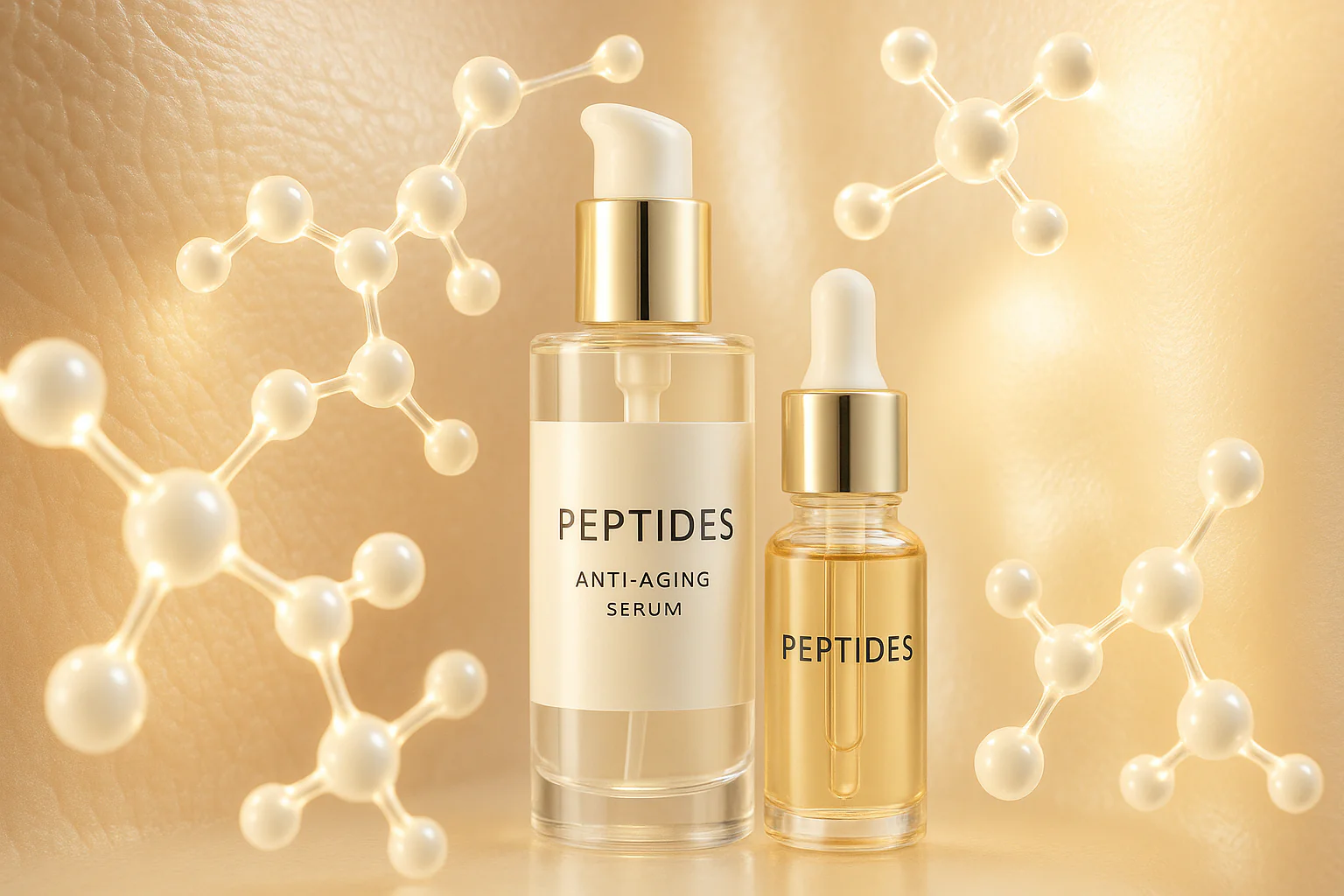
Peptides for Anti Aging: How to Speak Your Skin's Language for a Youthful Face
In the ever-evolving world of skincare, one truth remains constant: your skin responds best when you understand how it communicates. Fine lines, loss of firmness, dullness, and uneven texture aren’t random changes — they’re messages. And increasingly, science is showing that one of the most powerful ways to respond to those messages is through peptides.
Peptides are short chains of amino acids — the essential building blocks of proteins like collagen, elastin, and keratin. These proteins are responsible for keeping your skin firm, smooth, resilient, and youthful. As we age, our natural production of collagen and elastin slows down, leading to visible signs of aging. This is where peptides step in. Rather than masking imperfections, they work at a cellular level, sending targeted signals that encourage your skin to repair, rebuild, and renew itself.
Think of peptides as messengers that “speak your skin’s language.” They signal your cells to boost collagen production, improve elasticity, strengthen the skin barrier, and enhance hydration. The result isn’t an artificial or overfilled appearance — it’s skin that looks healthier, firmer, and more vibrant from within.
In this guide, we’ll explore how peptides work, why they’ve become a cornerstone in modern anti-aging skincare, and how to incorporate them effectively into your routine for a youthful, radiant face. Because true anti-aging isn’t about fighting your skin — it’s about understanding it and giving it exactly what it needs to thrive.
Table of Contents
- Introduction: The Cellular Conversation
- What Are Peptides? The Building Blocks of Youth
- How Peptides Trigger Skin Regeneration
- Types of Peptides: Carrier, Neurotransmitter, Enzyme Inhibitor & More
- Peptides vs Retinol: Allies, Not Enemies
- Clinical Evidence: Do Peptide Creams Really Work?
- How to Layer Peptides: Morning vs Night Routine
- Topical Peptides vs Collagen Supplements
- Risks, Side Effects & Skin Purging
- Frequently Asked Questions
- Resources & Next Steps
Key Takeaways: Peptides at a Glance
| Benefit | How It Works | Best For |
|---|---|---|
| Peptides for anti aging boost collagen | Signals fibroblasts to produce new collagen & elastin | Fine lines, firmness loss |
| Copper peptides benefits | Carries copper for wound healing & antioxidant defense | Repair, sagging skin |
| Neuropeptides (Argireline) | Reduces muscle contractions like Botox lite | Expression wrinkles (forehead, crow's feet) |
| Matrixyl 3000 | Signal peptide complex for collagen I, II, III, IV | Deep wrinkles, volume loss |
Introduction: The Cellular Conversation
Imagine your skin as a bustling city. Over time, the communication lines between the mayor (your cells) and the construction crew (fibroblasts) start to crack. The crew stops building the vital infrastructure—collagen, elastin, and fibrin—that keeps the city's skyscrapers (your skin) plump and lifted. This is where peptides for anti aging come in. They are the messengers, the biochemical couriers that restart the conversation. According to a 2021 review in the International Journal of Molecular Sciences, topical application of specific peptides can directly influence gene expression in skin cells, effectively coaxing mature skin to revert to younger patterns of regeneration. This isn't just another moisturizer; it's a form of cellular communication.
What Are Peptides? The Building Blocks of Youth
Peptides for skin are short chains of amino acids, essentially smaller fragments of proteins. Think of proteins like collagen as a long necklace, and peptides as a few beads snapped off that necklace. Because they are small, topical peptides penetrate the stratum corneum (the outer shield) much more easily than full size proteins. Once they reach the living layers of the skin, they act as signaling molecules. They sit on receptors on fibroblasts and say, "Hey, we need more structure here!" The result? Your skin ramps up production of fresh collagen, elastin, and fibrin.

How Peptides Trigger Skin Regeneration
The mechanism is elegant. As we age, the natural breakdown of collagen creates small peptide fragments. These fragments are supposed to signal for more repair, but the signal gets weaker over time. Applying concentrated anti aging peptides externally amplifies that signal. Specifically, peptides for face formulations penetrate and bind to receptors on fibroblasts. This triggers a cascade: the cell's nucleus gets the message to upregulate genes responsible for collagen type I, III, and elastin. A 2015 study published in the Journal of Cosmetic Dermatology found that a specific peptide complex increased dermal density by 14% after 12 weeks. In plain English, your skin gets physically thicker and stronger.
Types of Peptides: Carrier, Neurotransmitter, Enzyme Inhibitor & More
Not all skin peptides are created equal. It's a family with different talents. Understanding the difference helps you choose the right serum for your specific concern, whether it's deep wrinkles, loss of firmness, or expression lines.
Signal Peptides (The Construction Foreman)
These are the most common. Matrixyl 3000 is a famous example, a combination of two peptides (palmitoyl tripeptide 1 and palmitoyl tetrapeptide 7). They mimic the fragments of broken down collagen and directly tell fibroblasts to rebuild. They are excellent for overall peptides firming skin and smoothing fine lines.
Carrier Peptides (The Delivery Truck)
Copper peptides benefits fall into this category. GHK Cu (copper peptide) is a superstar. It carries copper ions, essential for enzyme function and wound healing, deep into the skin. It also has potent anti inflammatory properties and promotes the production of glycosaminoglycans, which hold moisture. If you are looking for repair and regeneration, this is your go to.
Neurotransmitter Inhibitors (The Wrinkles Relaxer)
Argireline (Acetyl Hexapeptide 8) is the most famous here. It works by inhibiting the release of neurotransmitters at the nerve muscle junction. In simple terms, it slightly relaxes facial muscles, softening expression lines like crow's feet and forehead furrows. It's often called "Botox in a bottle" because it mimics the effect, though it's milder and temporary.
Enzyme Inhibitor Peptides (The Bodyguard)
These peptides protect your precious collagen from being broken down. They inhibit the activity of matrix metalloproteinases (MMPs), enzymes that chew up collagen when triggered by UV damage or inflammation. By preserving what you have, they act as a long term anti aging strategy.
Peptides vs Retinol: Allies, Not Enemies
One of the most common questions in the People Also Ask section is: Are peptides better than retinol for wrinkles? The answer is that they work beautifully together. Retinol speeds up cell turnover and stimulates collagen by irritating the skin slightly (a controlled injury response). Peptides for anti aging work by signaling calmly. Retinol can be harsh; peptides are generally soothing. In fact, using a peptide moisturizer or serum can help mitigate the dryness and irritation caused by retinol. A smart routine might use retinol at night and a peptide rich cream in the morning.

Clinical Evidence: Do Peptide Creams Really Work?
Skepticism is healthy. Do these tiny molecules actually make a difference? A 2009 study (still a cornerstone in the field) showed that volunteers using a cream containing Matrixyl 3000 for two months saw a significant reduction in wrinkle depth and volume. More recent research, such as a 2022 controlled trial on a copper peptide complex, demonstrated statistically significant improvements in skin elasticity and hydration after 8 weeks. The key is formulation. Peptides must be packaged with effective delivery systems and at the right concentration. Look for products where the peptide is listed in the top half of the ingredients. The question Do peptide creams really work, or is it a myth? can be answered with a confident "Yes, they work," provided you choose evidence based formulas.
Another PAA query asks: What is the best percentage of peptides in skincare? Unlike vitamin C, there is no universally agreed percentage. Most effective studies use concentrations between 2% and 10% for specific peptide complexes. More importantly, the peptide must be bioavailable.
How to Layer Peptides: Morning vs Night Routine
How do I layer peptides in my skincare routine? This is crucial for getting results.
Morning Routine:
- Cleanse: Start with a gentle cleanser.
- Apply peptide serum: On damp skin. Peptides love hydration.
- Vitamin C: Can I use peptides with vitamin C and hyaluronic acid? Absolutely. In fact, it's a power trio. Apply vitamin C first (low pH), wait a minute, then your peptide serum, then a hyaluronic acid serum if desired.
- Moisturizer & Sunscreen: Seal it all in with a moisturizer and SPF 50.
Evening Routine:
- Double Cleanse: Remove makeup and sunscreen.
- Exfoliate (1 2x/week): Do not use harsh scrubs with peptides; they are delicate molecules.
- Retinol (if using): Apply your retinol.
- Peptide moisturizer: Follow with a rich peptide cream to support overnight repair and buffer any irritation from retinol.
This layering addresses concerns about peptides under eye bags and dark circles; applying a peptide rich eye cream after serums can help thicken the delicate under eye skin over time.
Topical Peptides vs Collagen Supplements
Are topical peptides better than taking collagen supplements? They serve different functions. Ingested collagen (hydrolyzed collagen) is broken down into amino acids and peptides in your gut and distributed throughout your body via the bloodstream. It can help improve skin, hair, nails, and joints from the inside. Topical peptides act locally on the skin's surface, sending direct signals to fibroblasts. They are not competitors; they are complementary. For the best results, many experts suggest doing both: drink your collagen to provide the raw materials, and apply peptide serums to direct the construction crew.
Risks, Side Effects & Skin Purging
Generally, peptides are safe for sensitive skin and even during pregnancy, because they are naturally occurring fragments of protein. However, no ingredient is zero risk for everyone. Some individuals with very reactive skin might experience mild irritation, redness, or breakouts from the carrier ingredients in a peptide cream, not the peptide itself.
A common question is: Can peptides cause side effects or skin purging? True "purging" (an acceleration of cell turnover bringing clogs to the surface rapidly) is typical with ingredients like retinol or AHAs. Peptides do not increase cell turnover in that way. If you break out, it's likely an irritation response or a reaction to an emollient in the formula, not the peptide. Always patch test a new peptide serum on your jawline for a few days before applying it to your whole face.
Regarding safety during pregnancy, while most dermatologists consider topical peptides safe because they are not systemically active in high doses, you should always check with your obstetrician. There is a lack of large scale studies on pregnant women.
Potential Adverse Reactions to Peptides
| Risk Category | Examples | Frequency |
|---|---|---|
| Contact Dermatitis | Redness, itching, stinging | Rare; usually due to preservatives |
| Breakouts | Small whiteheads or papules | Occasional; check formula for pore cloggers |
| Allergic Reaction | Hives, swelling | Extremely rare |
Addressing Your Top Questions About Peptides
Let's answer some of the burning questions from the People Also Ask section concisely.
- What do peptides do for anti aging? They signal skin cells to produce more collagen and elastin, reducing the appearance of fine lines and improving firmness.
- How long does it take for peptides to work on skin? Most studies show noticeable improvement in skin texture and firmness after 8 to 12 weeks of consistent use.
- Do peptides help with under eye bags and dark circles? Yes, by thickening the skin and improving circulation, certain peptides can reduce the appearance of puffiness and darkness over time.
- What is the difference between collagen and peptides? Collagen is a large, structural protein. Peptides are smaller fragments that signal the body to produce more collagen.
- Can peptides tighten loose skin on the neck and jawline? Absolutely. Firming peptides, especially signal peptides and copper peptides, can improve skin laxity with consistent application.
- Do I need a prescription for peptide skincare? No, the vast majority of cosmetic peptide products are over the counter. Some medical grade products contain higher concentrations but are still not prescription drugs.
Frequently Asked Questions
Are peptides better than retinol for wrinkles?
They are different tools. Retinol increases cell turnover and collagen production through gentle irritation, while peptides signal for collagen calmly. They work best in tandem, not as replacements.
Can I use peptides with vitamin C and hyaluronic acid?
Yes, this combination is highly effective. Apply vitamin C first, then peptides, then hyaluronic acid to lock in moisture and boost overall results.
Do peptides cause side effects or skin purging?
Peptides do not typically cause purging. They are generally well tolerated. Mild irritation is rare and usually due to other ingredients in the formulation.
Are topical peptides better than taking collagen supplements?
They serve different purposes. Topical peptides signal locally for collagen synthesis, while supplements provide systemic building blocks. Use both for optimal skin health.
Are peptides safe for sensitive skin or during pregnancy?
Generally, yes, peptides are safe for sensitive skin. During pregnancy, most topical peptides are considered low risk, but you should always consult your healthcare provider.
Resources & Next Steps
If you are looking to incorporate peptides for anti aging into your regimen, explore reputable brands that publish clinical data. For those interested in the broader field of regenerative medicine and performance, you may find related wellness products at RxAnabolics. They offer a range of products from Skin and Anti Aging Products to advanced Peptides Products. For specific concerns like under eye revitalization, check their Hair and Beauty Products section.
Remember, consistency is key with peptides. You are essentially retraining your skin's communication network, and that takes time and patience.
Medical Disclaimer: This article is for informational purposes only. Consult a licensed medical professional before starting or stopping any medication, therapy, or modification to your health regimen. Individual results may vary.
Information presented is based on research available as of 2026 and applies to the United States market.


Leave a Reply