
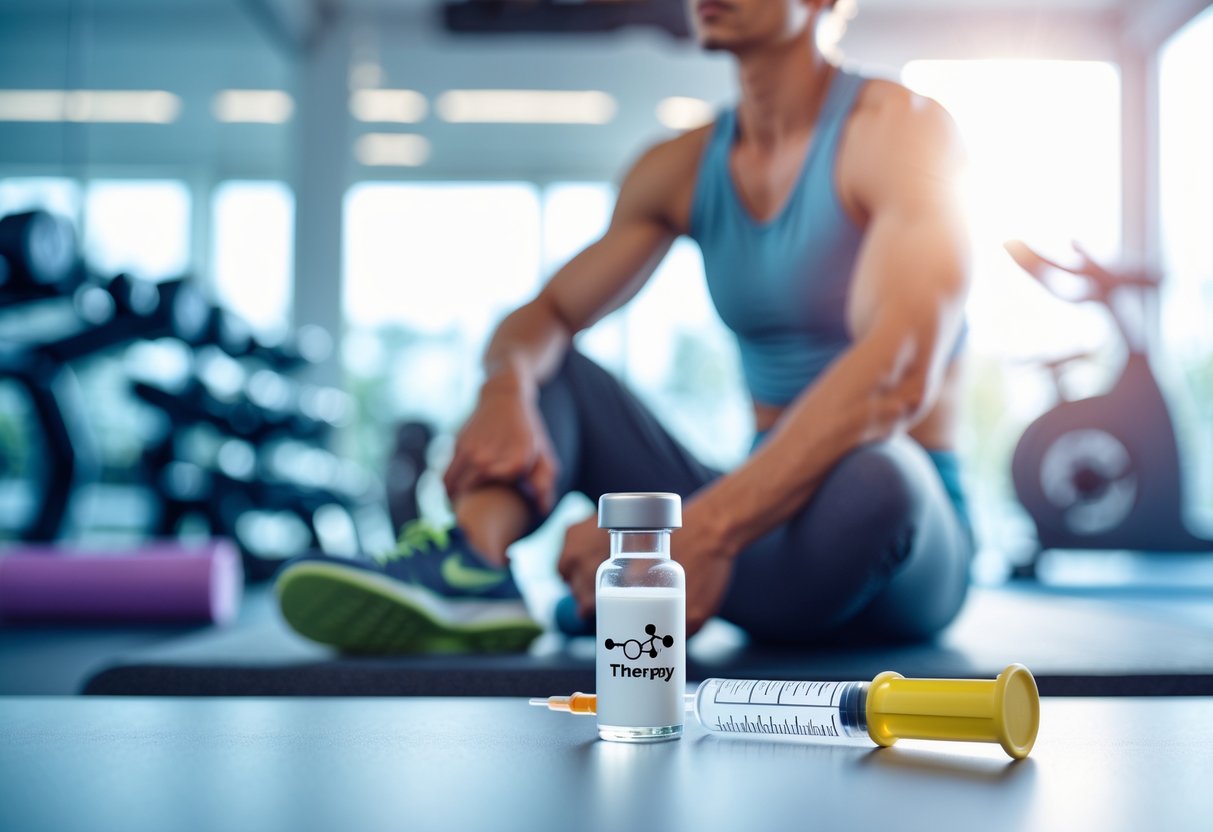
The Definitive Guide to HGH Muscle Recovery: Repair, Regenerate, and Return Stronger
You finish an epic leg day, a grueling marathon training session, or a heavy set of deadlifts. The initial rush of endorphins fades, and a familiar, deep ache begins to set in. For the dedicated athlete, the aging gym-goer, or the weekend warrior, this moment marks the real beginning of progress: the recovery phase. It's here, in the quiet hours after exertion, where your body either breaks down or builds back stronger. And at the heart of this critical process is a powerful hormone: Human Growth Hormone (HGH). While often sensationalized for its muscle-building claims, its true superpower lies in muscle repair and regeneration. This guide cuts through the hype to deliver a science-backed, no-BS explanation of how HGH accelerates and enhances workout recovery, the natural ways to support it, and the serious realities of synthetic use. Whether you're battling persistent soreness at 45 or seeking an edge in your athletic performance, understanding how does HGH help recovery is your key to unlocking consistent progress.
Table of Contents
- What is HGH and Why Is It Crucial for Recovery?
- The Science: How HGH Actually Accelerates Muscle Recovery
- Natural HGH Boosters for Recovery: Your Lifestyle Toolkit
- Synthetic HGH and Peptide Therapy: Benefits, Risks, and Realities
- HGH vs. Testosterone: Different Tools for Muscle Repair
- Frequently Asked Questions (FAQs)
- Final Thoughts and Responsible Next Steps
| Aspect | Key Takeaway | Target Audience Insight |
|---|---|---|
| Primary Role | Drives cellular repair, protein synthesis, and collagen production post-exercise. | Essential for anyone wanting faster recovery after exercise and less downtime. |
| Natural Peak | Pulsates during deep sleep (especially Slow-Wave Sleep) and after intense exercise. | Aging adults see natural decline; optimizing sleep and exercise is critical. |
| Synthetic HGH | Can significantly enhance repair but carries serious health and legal risks. | Athletes & bodybuilders must weigh potential benefits of HGH against severe side effects. |
| Best Natural Strategy | High-intensity exercise, quality sleep, strategic fasting, and specific amino acids. | The most sustainable and safe path for reduce muscle soreness with HGH support. |
What is HGH and Why Is It Crucial for Recovery?
Human Growth Hormone (HGH), or somatotropin, is a peptide hormone produced by the pituitary gland. It's not just for growing children. In adults, it acts as a master regulator of metabolism, body composition, and, most importantly for us, tissue repair. Think of it as your body's chief construction foreman, orchestrating the cleanup and rebuilding crew after the "demolition" of intense training.
When you exercise, particularly through resistance training or high-intensity intervals, you create microscopic tears in your muscle fibers, deplete energy stores, and cause inflammation. This is a normal, necessary stimulus for growth. HGH muscle recovery processes are initiated in response to this damage. Your pituitary gland releases a pulse of HGH into the bloodstream. This hormone then travels to tissues like muscle and liver, where it binds to receptors and sets off a cascade of anabolic (building) events. Crucially, much of its muscle-repairing effects are mediated through a secondary hormone called Insulin-like Growth Factor 1 (IGF-1), produced primarily in the liver. The role of IGF-1 in muscle growth and repair is direct, promoting the uptake of amino acids into muscle cells and accelerating cell proliferation.
The Recovery Connection: Beyond Just "Getting Big"
For the fitness enthusiast, improved recovery means you can train harder and more frequently without burning out. For the aging active adult, it means being able to maintain a vigorous lifestyle without being sidelined for days by intense soreness. For the bodybuilder, it means maximizing the adaptive response to each session. Ultimately, effective HGH and workout recovery translates to better performance, sustained motivation, and long-term health of your muscles, tendons, and ligaments.
The Science: How HGH Actually Accelerates Muscle Recovery
Let's move beyond abstract claims and into the cellular mechanics. How does HGH actually speed up muscle recovery? It works through several interconnected pathways.
1. Supercharging Protein Synthesis and Muscle Repair
After exercise, your muscles are primed to rebuild. HGH enhances this by increasing the transportation of amino acids (the building blocks of protein) into muscle cells. It upregulates mRNA translation, the cellular machinery that assembles these amino acids into new contractile proteins like actin and myosin. This is the essence of growth hormone and protein synthesis. A study published in the Journal of Applied Physiology found that elevated GH levels post-exercise correlate strongly with increased rates of muscle protein synthesis, confirming its direct anabolic role in repair (source: PubMed Central). This process directly repairs the micro-tears, leading to muscle growth and strengthened fibers.
2. Enhancing Collagen Synthesis for Tendons and Ligaments
Muscles aren't the only tissues stressed during training. Your tendons, ligaments, and connective tissue bear immense load. HGH for tendons and ligaments is a major benefit, as it significantly boosts the synthesis of collagen, the primary structural protein in these tissues. Stronger collagen means more resilient joints, a lower risk of injury, and better force transmission from muscle to bone. This is why HGH therapy for injury healing, particularly for soft tissue injuries, has been explored in clinical settings.
3. Mobilizing Fuels for the Repair Process
Recovery is energetically expensive. HGH helps mobilize energy stores by stimulating lipolysis (the breakdown of fat for energy), sparing glucose and amino acids so they can be used for repair instead of fuel. It also promotes glycogen re-synthesis, replenishing the muscle's primary energy stores for your next bout of activity.
4. Reducing Inflammation and Oxidative Stress
While acute inflammation is a necessary signal for repair, chronic or excessive inflammation can delay recovery and cause tissue damage. HGH has been shown to modulate the immune response, potentially helping to resolve inflammation more efficiently after the initial post-workout phase. This may contribute to a noticeable reduce muscle soreness with HGH support, including the dreaded DOMS (Delayed Onset Muscle Soreness).
| Mechanism | Action | Recovery Outcome |
|---|---|---|
| Protein Metabolism | Increases amino acid uptake & protein synthesis rates. | Repairs micro-tears, builds new muscle tissue. |
| Collagen Synthesis | Stimulates fibroblast activity & collagen production. | Strengthens tendons, ligaments, and connective tissue. |
| Fuel Mobilization | Promotes lipolysis & glycogen synthesis. | Provides energy for repair, replenishes muscle fuel. |
| IGF-1 Mediation | Stimulates liver & local production of IGF-1. | Directly stimulates muscle cell growth & proliferation. |
Natural HGH Boosters for Recovery: Your Lifestyle Toolkit
Unless you have a diagnosed deficiency, the safest and most sustainable approach is to optimize your body's own production. Here are evidence-based natural ways to increase HGH for better recovery.
1. Prioritize Deep, Quality Sleep
How does sleep affect HGH and muscle recovery? Profoundly. The largest pulses of HGH occur during Slow-Wave Sleep (SWS), the deepest stage of non-REM sleep. Poor sleep or sleep deprivation can slash your natural HGH output by over 70%. Aim for 7-9 hours of uninterrupted sleep in a dark, cool room. This is your most powerful natural HGH booster for recovery.
2. Master Your Exercise Strategy
Not all exercise is equal for stimulating HGH. High-intensity modalities are best:
- Resistance Training: Heavy compound lifts (squats, deadlifts, presses) with moderate volume and short rest intervals (60-90 seconds) create a significant hormonal response.
- High-Intensity Interval Training (HIIT): Sprints, cycling intervals, or circuit training that pushes your anaerobic threshold.
The metabolic stress and muscle damage from these activities are potent triggers for HGH release.
3. Optimize Your Diet for HGH Release
What is the best diet to support natural HGH production for recovery? It focuses on nutrient timing and composition.
- Strategic Fasting/Time-Restricted Eating: A 12-16 hour overnight fast can lead to a spike in HGH. Avoid eating close to bedtime.
- Manage Insulin Spikes: High blood sugar and insulin levels can blunt HGH release. Limit refined carbs and sugars, especially outside the post-workout window.
- Key Nutrients: Ensure adequate intake of Magnesium, Zinc, Vitamin D, and the amino acids Arginine, Glutamine, and Glycine. Some studies show these can support HGH secretion.
4. Manage Stress and Body Composition
Chronic stress elevates cortisol, a catabolic hormone that directly opposes HGH. Practices like meditation, mindfulness, and leisure activities are crucial. Furthermore, excess body fat, particularly visceral fat, is associated with blunted HGH secretion. Maintaining a healthy body composition supports optimal hormonal function.

Image: High-intensity resistance training is a powerful natural stimulant for HGH release.
Synthetic HGH and Peptide Therapy: Benefits, Risks, and Realities
This is where the conversation requires serious caution. Synthetic HGH (somatropin) is a prescription medication for diagnosed conditions like growth hormone deficiency or muscle-wasting diseases. Its off-label use for athletic recovery and performance is widespread but fraught with peril.
Potential Benefits (The Allure)
When exogenous HGH is introduced, levels can be supra-physiological (above natural range). Users report:
- Dramatically faster recovery after exercise and between workouts.
- Noticeable reduction in joint pain and improved healing of minor injuries. Can HGH help repair torn muscles or ligaments? It may accelerate the process, but it's not a magic bullet and should never replace proper medical care.
- Decreased body fat and increased lean mass, though the muscle gains are less pronounced than with AAS (Anabolic Androgenic Steroids) without proper training and nutrition.
Significant Risks and Side Effects (The Dark Side)
The side effects of using HGH for muscle building can be severe and irreversible:
- Acromegaly-like Symptoms: Enlarged hands, feet, and facial features (brow, jaw) due to bone and soft tissue growth.
- Insulin Resistance & Diabetes: HGH opposes insulin, leading to elevated blood sugar and potential type 2 diabetes.
- Carpal Tunnel Syndrome: Soft tissue swelling in the wrists compresses nerves.
- Cardiovascular Issues: Increased risk of hypertension and cardiomyopathy (enlarged heart).
- Joint and Muscle Pain.
- Increased Risk of Certain Cancers: As HGH and IGF-1 promote cell proliferation, there is a theoretical risk of promoting existing malignancies.
Legal Status and Peptide Alternatives
Are HGH injections legal for athletic recovery? In the United States, HGH is a Schedule III controlled substance. Its non-prescribed possession or distribution is illegal. It is also banned by all major sports organizations (WADA, NCAA, professional leagues).
This has led many to explore peptide therapy for muscle repair. Peptides like GHRP-6, GHRP-2 (GHRP-2), Ipamorelin (Ipamorelin), and CJC-1295 (CJC-1295) are growth hormone secretagogues. They stimulate your pituitary gland to release more of its own HGH. While often marketed as a "safer, legal grey area," they are still research chemicals with potential side effects and their legal status for human use is complex and often falls into a grey area unless prescribed. Other peptides like BPC-157 (BPC 157 5mg) and TB-500 (TB-500 5mg) are touted for their direct healing properties but require extensive research and professional guidance.
| Risk Category | Specific Examples | Long-Term Concern |
|---|---|---|
| Metabolic | Insulin resistance, diabetes, hyperlipidemia. | Chronic disease, cardiovascular damage. |
| Morphological | Acromegaly, organomegaly (enlarged organs). | Irreversible physical changes, organ dysfunction. |
| Musculoskeletal | Carpal tunnel, arthralgia (joint pain), myalgia. | Chronic pain, impaired mobility. |
| Cardiovascular | Hypertension, cardiomyopathy. | Heart failure, stroke. |
| Legal & Ethical | Prescription fraud, competition bans, criminal charges. | Career loss, legal penalties. |
HGH vs. Testosterone: Different Tools for Muscle Repair
What is the difference between HGH and testosterone for muscle repair? Both are anabolic hormones, but they play distinct, complementary roles.
- Testosterone is a steroid hormone that directly and powerfully stimulates muscle protein synthesis. It increases the number of myonuclei in muscle fibers and enhances aggressiveness and strength. It's like the architect ordering a massive increase in construction materials and workforce.
- HGH, as we've detailed, is more of a regenerative and metabolic hormone. It enhances the repair environment, strengthens the connective tissue "scaffolding," mobilizes energy, and works indirectly via IGF-1. It's the site manager who improves the construction site's infrastructure, waste removal, and supply lines.
Many athletes using performance-enhancing substances will combine the two (along with other compounds) for a synergistic effect, but this exponentially increases health risks. For natural athletes, supporting both systems through lifestyle is key. Learn more about supporting testosterone naturally in our guide on Top Testosterone Boosting Exercises.
Frequently Asked Questions (FAQs)
How does HGH actually speed up muscle recovery?
HGH accelerates recovery primarily by increasing protein synthesis to repair muscle fibers, boosting collagen production for tendons/ligaments, and mobilizing energy stores (fat) to fuel the repair process, all mediated significantly through IGF-1.
Can HGH help repair torn muscles or ligaments?
It may accelerate the healing process by enhancing collagen synthesis and reducing inflammation. However, it is not a standalone cure and must be part of a comprehensive medical and rehabilitative plan under a doctor's supervision for serious injuries.
What are the natural ways to increase HGH for better recovery?
Prioritize deep sleep (7-9 hours), engage in high-intensity exercise (heavy lifting, HIIT), practice intermittent fasting, manage stress, maintain healthy body fat levels, and ensure adequate intake of key nutrients like magnesium, zinc, and specific amino acids.
What is the difference between HGH and testosterone for muscle repair?
Testosterone directly drives muscle protein synthesis and adds new cell nuclei. HGH creates a better repair environment by strengthening connective tissue, improving energy use, and working indirectly through IGF-1. They are complementary but different anabolic agents.
Are HGH injections legal for athletic recovery?
In the USA, HGH is a prescription-only Schedule III controlled substance. Using it without a diagnosis of deficiency is illegal. It is also banned by all major sports governing bodies worldwide.
What are the side effects of using HGH for muscle building?
Serious side effects include acromegaly (bone growth in face/hands/feet), insulin resistance/diabetes, carpal tunnel syndrome, joint pain, hypertension, and potential increased cancer risk. The risks often outweigh the benefits for healthy individuals.
How does sleep affect HGH and muscle recovery?
The largest natural pulses of HGH occur during deep, slow-wave sleep. Poor sleep quality or duration can reduce HGH production by over 70%, severely impairing your body's nightly repair and recovery processes.
Does HGH reduce muscle soreness (DOMS)?
By enhancing repair efficiency and potentially modulating inflammation, optimized HGH levels (natural or synthetic) can lead to a noticeable reduction in the severity and duration of Delayed Onset Muscle Soreness (DOMS).
How long does it take for HGH to improve recovery time?
For natural optimization, consistent lifestyle changes (sleep, diet, exercise) can improve recovery within weeks. With synthetic HGH, users often report perceiving improved recovery within the first few weeks of a cycle, but significant tissue changes take months.
Is HGH therapy safe for older adults trying to recover from exercise?
HGH therapy for age-related decline is a controversial medical topic. It may be prescribed for diagnosed Adult Growth Hormone Deficiency (AGHD). For otherwise healthy older adults, the cardiovascular and diabetic risks often contraindicate its use solely for improving exercise recovery. Natural methods are strongly preferred.
Final Thoughts and Responsible Next Steps
Understanding HGH muscle recovery mechanics empowers you to make smarter decisions for your fitness and health. The undeniable science shows that optimizing your body's natural HGH pulsatility through lifestyle is the safest, most effective long-term strategy for enhanced human growth hormone muscle repair. For those considering the synthetic path, the potential for faster recovery is shadowed by substantial, often irreversible health risks and legal consequences.
Your journey should always begin with the fundamentals: master your sleep, refine your training nutrition, and manage stress. If you suspect a true hormonal deficiency, consult an endocrinologist for proper testing. If you are researching advanced compounds like peptides or growth hormone for informed, responsible use, always prioritize sourcing from reputable suppliers and understand the legal landscape.
Disclaimer: This article is for informational and educational purposes only. It does not constitute medical advice. The information provided about HGH, peptides, and other compounds is not a substitute for professional medical advice, diagnosis, or treatment. Always seek the advice of your physician or other qualified health provider with any questions you may have regarding a medical condition or before starting any new therapy, supplementation, or exercise regimen. The misuse of prescription medications or controlled substances is dangerous and illegal.
Ready to Explore Advanced Recovery Solutions Responsibly?
If your research leads you to consider peptide therapies or other performance and recovery supplements, it is critical to source from trusted, high-quality suppliers. Explore our curated selection of research compounds and supportive supplements, including Peptide Products, PCT Cycle Support, and Joint Support formulations, all designed for the discerning researcher. Educate yourself thoroughly before making any decisions.

Leave a Reply