
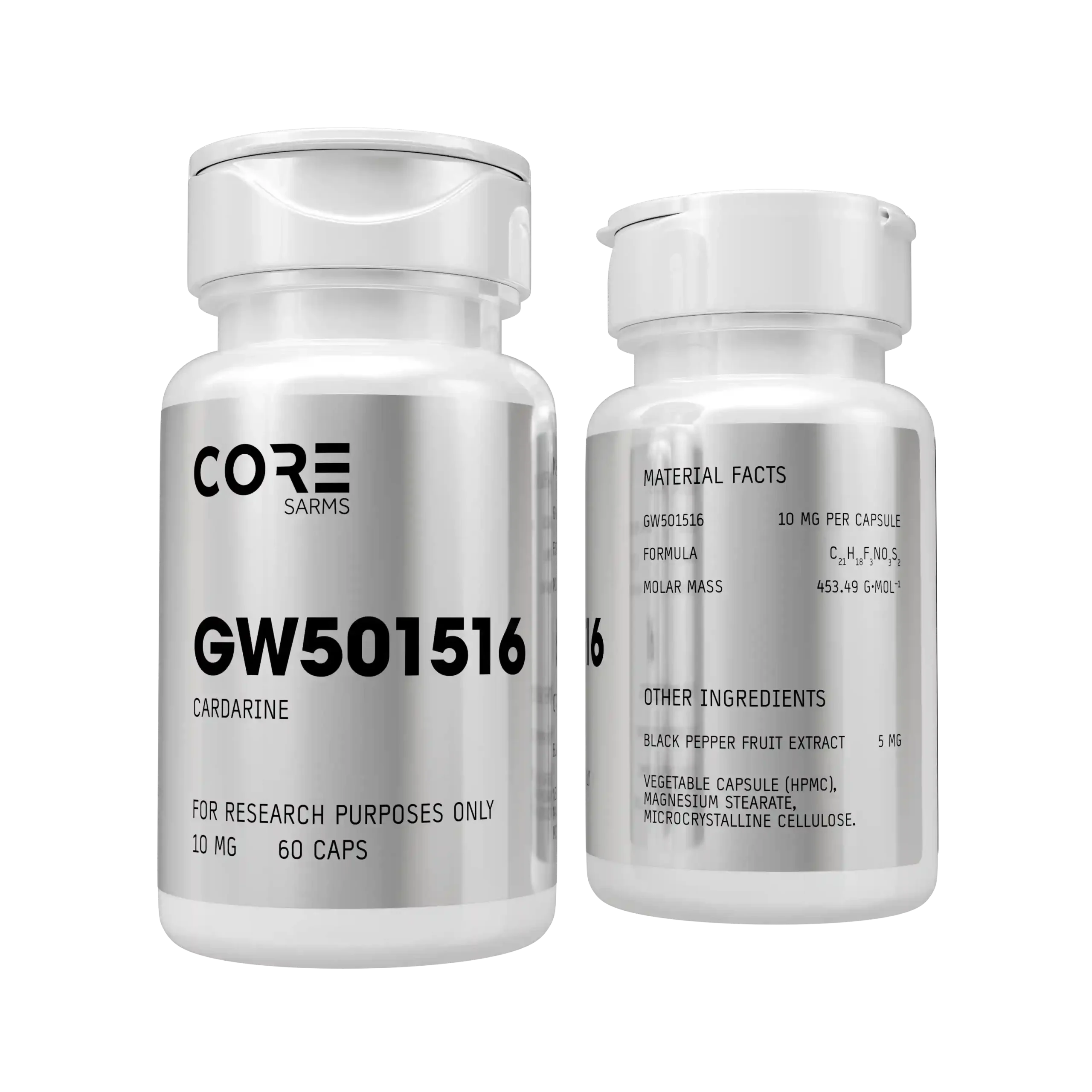
GW 501516 Fat Loss Review: The Compelling Science and Stark Cancer Warning
In the relentless pursuit of a shredded physique, athletes and biohackers often venture into the grey market of research chemicals, where promises of miraculous GW 501516 fat loss results clash with ominous warnings of tumor growth. This is the paradox of Cardarine. Early preclinical studies suggested it could revolutionize metabolic health, yet long-term animal data led to its abrupt abandonment due to cancer in every organ tested. This comprehensive, evidence-based review aims to dissect the potent allure of Cardarine fat loss mechanisms while delivering an unambiguous verdict on its profound risks, providing you with the clarity needed to make an informed, and likely life-preserving, decision.
Table of Contents
- What is GW 501516 (Cardarine)?
- The Fat-Burning Science: How Cardarine Works
- Analyzing the Research: Proven Results vs. Preclinical Hype
- The Elephant in the Room: Does Cardarine Really Cause Cancer?
- Common and Serious Side Effects
- Dosage, Cycles, and Stacking: The Underground Protocols
- Legal and Regulatory Status: Why is Cardarine Banned?
- Safer, Legal Alternatives for Fat Loss and Endurance
- Final Verdict: Should You Consider GW 501516 for Fat Loss?
- Frequently Asked Questions (FAQ)
Quick Summary: GW 501516 at a Glance
| Aspect | Details |
|---|---|
| Primary Use | Research chemical investigated for metabolic syndrome, fat loss, and endurance enhancement. |
| Mechanism | PPAR delta agonist that increases fatty acid oxidation and glucose uptake in skeletal muscle. |
| Key Preclinical Benefit | Dramatically improved running endurance, reduced obesity in rodents. |
| Most Severe Risk | Carcinogenicity: Rapid onset of malignant tumors in multiple organs in rodent studies. |
| Human Data | Extremely limited. No large-scale, long-term human trials for safety or efficacy. |
| WADA Status | Banned since 2009. Not approved for human use by any major regulatory body (FDA, EMA). |
What is GW 501516 (Cardarine)? From Pharmaceutical Hope to Fitness Controversy
GW 501516, widely known by its trivial name Cardarine, was never a supplement. It was a drug candidate born in the late 1990s from a collaboration between pharmaceutical giants GlaxoSmithKline and Ligand Pharmaceuticals. Its initial promise was staggering: a potential treatment for metabolic diseases like obesity, type 2 diabetes, and dyslipidemia by acting as a potent and selective agonist for the PPAR-delta (Peroxisome Proliferator-Activated Receptor delta) pathway.
The compound generated significant excitement in scientific circles. However, its journey was cut short when long-term toxicology studies revealed a disturbing trend of rapid carcinogenesis in animal models. The development was shelved, and GW 501516 never reached human prescription markets. Despite this, its legend was born in the fitness underground, where its preclinical fat loss and endurance data were repurposed as a sales pitch, divorced from the critical context of its terminal safety profile.
The Fat-Burning Science: How Does Cardarine Work to Burn Fat?
To understand why GW 501516 is so compelling, you must understand its elegant, yet powerful, mechanism. It is not a stimulant, nor does it directly raise metabolism like thyroid hormone or DNP. Instead, it reprograms your muscles at a genetic level.
As a selective PPAR delta agonist, Cardarine activates the PPAR-delta receptor, a nuclear receptor that functions as a master regulator of genes involved in energy metabolism. When activated, it triggers a cascade of effects:
- Shift to Fat as Fuel: It upregulates enzymes that promote fatty acid oxidation. Your skeletal muscles become exceptionally efficient at burning stored fat for energy, sparing glycogen. This is the core of its purported fat loss effect.
- Glucose Disposal: It enhances insulin sensitivity and glucose uptake in muscles, improving metabolic markers.
- Endurance Transformation: By increasing the number of slow-twitch, oxidative (Type I) muscle fibers and mitochondrial biogenesis (the creation of new cellular power plants), it dramatically improves stamina. Users report being able to perform cardio for hours. This synergistic effect creates a powerful cycle: more endurance allows for more calorie expenditure, further driving fat loss.
- Improved Lipid Profile: Studies in animals showed it could raise HDL ("good") cholesterol and lower LDL ("bad") cholesterol and triglycerides.
In essence, GW 501516 tricks your body into behaving like that of a metabolically elite endurance athlete, optimizing it to burn fat and resist fatigue. This potent mechanism explains the rave GW501516 reviews and dramatic Cardarine before and after transformations shared online. The science behind does Cardarine burn fat is, from a mechanistic standpoint, very plausible.
Analyzing the Research: Proven Results vs. Preclinical Hype
Here lies the great divide: the compelling preclinical data versus the near-total absence of human clinical evidence for GW 501516 fat loss.
The Promising (Preclinical) Data
A landmark 2007 study published in Cell Metabolism (1) demonstrated the compound's potential. Mice treated with GW 501516 and fed a high-fat, high-carbohydrate diet gained significantly less weight than control mice. They also showed a complete reversal of diet-induced insulin resistance and a dramatic increase in running endurance (up to 70% longer before exhaustion). These findings ignited interest in the compound as a "exercise mimetic" a pill that could confer the benefits of exercise.
The Human Data Void
Human trials were initiated but never completed to long-term phases. A small, short-term study published in The Lancet in 2007 (2) investigated its effects on HDL cholesterol in healthy volunteers. While it successfully raised HDL levels, the study was brief and not designed to assess fat loss or long-term safety. This is the extent of peer-reviewed human data. There are no randomized controlled trials examining GW 501516 results for body composition over 8-12 weeks, the typical duration of a "cutting" cycle.
All anecdotal reports of dramatic Cardarine before and after photos and logs exist in an evidence vacuum. While many are likely genuine experiences (the mechanism supports observable effects), they are completely unverified and cannot account for individual variability, the placebo effect, or, most importantly, latent health consequences.
The Elephant in the Room: Does Cardarine Really Cause Cancer?
WARNING: This section discusses the primary reason GW 501516 was abandoned. The data is derived from regulatory toxicology studies, which are designed to assess long-term risk.
This is not speculation or fearmongering. It is the documented conclusion of the compound's own developers. When GlaxoSmithKline conducted standard two-year rodent carcinogenicity studies (the gold standard for predicting human cancer risk), the results were catastrophic.
Rats and mice were given GW 501516 at various doses. The findings, which are in the public domain, showed a dose-dependent and rapid onset of malignancies in virtually every organ system studied, including the liver, stomach, thyroid, tongue, skin, testes, ovaries, and womb. Tumors appeared quickly, even at doses considered relatively low. The mechanism is believed to be related to sustained PPAR delta agonist activity promoting unchecked cellular proliferation.
Dr. David Juurlink, a pharmacologist and toxicologist at the University of Toronto, has been vocal about the dangers. He states, "The animal data on GW501516 is among the most alarming I've ever seen. The carcinogenic effect wasn't a maybe; it was a when." This is why the World Anti-Doping Agency (WADA) explicitly banned it in 2009, citing not only performance enhancement but also "potential for health risks."
Proponents online often argue that "rodent biology is different" or that the doses used were "supra-physiological." While there is always uncertainty in translating animal toxicology to humans, toxicologists rely on these very studies to protect human health. Ignoring such a clear, multisystemic signal of carcinogenicity is an immense gamble with one's long-term health. The GW 501516 cancer risk is the central, non-negotiable fact of its profile.
Common and Serious Side Effects of Cardarine
Beyond the carcinogenic risk, user reports and the limited human data point to other potential adverse effects.
| Side Effect Category | Reported Manifestations |
|---|---|
| Common User-Reported | Headaches, mild nausea (especially at cycle start), fatigue, suppressed appetite. |
| Musculoskeletal | Tendon tightness or an increased risk of tendonitis. Some theories suggest the disproportionate increase in strength/endurance may outpace tendon adaptation. |
| Metabolic | While improving lipid profiles in studies, its long-term impact on human metabolism is unknown. |
| Most Serious (Theoretical) | Cancer risk (as discussed), potential for promoting the growth of pre-existing micron tumors, unknown organ toxicity with prolonged use. |
Dosage, Cycles, and Stacking: The Underground Protocols
(Note: This section describes common practices reported in fitness forums for informational purposes. It does not constitute recommendation or approval.)
In the absence of medical guidance, a community-standard Cardarine dosage for cutting has emerged. Typical protocols suggest 10-20mg per day, taken once daily in the morning or before a workout due to its long half-life. Cycles are usually limited to 8-12 weeks, followed by an equal time off, in a vain attempt to mitigate unknown risks.
It is frequently stacked with other compounds, most notably in a SARMs stack for cutting. A common combination is Cardarine with Ostarine (MK-2866) or Andarine (S4), aiming to preserve muscle mass while in a calorie deficit. Others stack it with stimulant-based fat burners for a synergistic effect. These stacks multiply the unknown variables and potential for adverse interactions.
The critical question, "How fast do you see fat loss with Cardarine?" is anecdotal. Users report noticeable endurance boosts within days, with visible fat loss and vascularity appearing around weeks 3-4, assuming a strict diet. However, these GW501516 results are highly individual and not guaranteed.
Legal and Regulatory Status: Why is GW 501516 Banned?
GW 501516 is not for human consumption. It is an unapproved research chemical.
- FDA/EMA: It has no approval as a drug or dietary supplement in the United States or European Union.
- WADA: It is explicitly prohibited at all times (in and out of competition) under section S4 "Metabolic Modulators" of the WADA Prohibited List.
- Purchasing: It is typically sold by online research chemical vendors with disclaimers stating it is for lab research only. Quality control is nonexistent, leading to risks of mislabeling, contamination, or variable purity.
Simply put, its legal status reflects its dangerous and unproven nature for human use.
Safer, Legal Alternatives for Fat Loss and Endurance
If your goals are improved body composition, endurance, and metabolic health, proven and safer pathways exist.
| Alternative | Purpose/Mechanism | Notes |
|---|---|---|
| Caloric Deficit + Progressive Resistance Training | The foundational, non-negotiable method for fat loss while preserving muscle. | Effective, free, and without side effects when done correctly. |
| Evidence-Based Supplements | Caffeine (performance), Creatine (strength/power), Omega-3s (metabolic health), Whey Protein (satiety/muscle). | Extensively researched and safe for most. |
| Pharmaceutical-Grade Options (with prescription) | GLP-1 agonists like Semaglutide (Ozempic/Wegovy) for appetite control, or T3 Cytomel for metabolic rate (under strict medical supervision). | These require a doctor's prescription and monitoring. Explore our Fat Burners and Peptides categories for research compounds with a better-known profile. |
| Other SARMs (with caution) | Ostarine (MK-2866) for muscle preservation during a cut. See our SARMS Products. | Also carry risks and lack long-term human data, but lack the same glaring carcinogenic signal as Cardarine. |
Final Verdict: Should You Consider GW 501516 for Fat Loss?
The analysis leads to an unambiguous conclusion. The mechanism of GW 501516 for fat loss and endurance is scientifically elegant and potent, which explains its underground appeal. The purported GW501516 results are likely real for many users in the short term.
However, these potential benefits are catastrophically outweighed by the severe and documented risks. The carcinogenicity data from animal studies is not a minor side note; it is the defining characteristic of this compound. Trading a marginally faster cut for a significantly increased lifetime risk of cancer is a Faustian bargain no informed individual should make.
Our Verdict: Not Recommended. The potential for serious, life-threatening harm far exceeds any potential benefit for GW 501516 fat loss. There are safer, more sustainable, and often more effective ways to achieve your fitness goals.
Medical/Legal Disclaimer: This article is for informational and educational purposes only. The content is not intended to be a substitute for professional medical advice, diagnosis, or treatment. The compounds discussed are not approved for human consumption and may be illegal to possess or use without authorization. Always seek the advice of your physician or other qualified health provider with any questions you may have regarding a medical condition or before starting any new health regimen. Never disregard professional medical advice or delay in seeking it because of something you have read here. The author and publisher disclaim any liability for any adverse effects resulting from the use or application of the information contained herein.
Pursue Your Goals Safely & Effectively
Your health is your greatest asset. Explore our curated selection of researched ancillaries, peptides, and supplements designed to support your journey within a framework of informed choice.
Visit our Online Shop to browse products, or deepen your knowledge with our Expert Blog on safe performance enhancement.
Explore Safer Alternatives NowFrequently Asked Questions (FAQ)
Is GW 501516 safe for humans to take?
No. Based on long-term animal studies showing rapid onset of cancers in multiple organs, GW 501516 is considered unsafe for human use. It was abandoned by its pharmaceutical developers for this reason.
What are the proven results of GW 501516 for fat loss?
There are no proven GW 501516 results for fat loss in humans from large-scale clinical trials. All evidence is preclinical (animal studies) or anecdotal from the fitness community.
Does Cardarine really cause cancer?
Rodent carcinogenicity studies mandated for drug development showed that Cardarine caused malignant tumors in a dose-dependent manner. This strong signal is the primary reason for its cancer risk warning.
What is the proper dosage of GW 501516 for cutting?
There is no medically approved dosage. Underground protocols typically suggest 10-20mg daily for 8-12 weeks. However, any use carries the severe risks outlined in this article.
How fast do you see fat loss with Cardarine?
Anecdotally, users report increased endurance within days and visible fat loss within 3-4 weeks when combined with diet and exercise. This is not guaranteed and is highly individual.
Can GW 501516 improve endurance and burn fat?
Its mechanism as a PPAR delta agonist strongly supports this dual effect in theory. Animal studies confirmed dramatic endurance increases and obesity resistance, but human data is lacking.
What are the most common side effects of Cardarine?
User-reported side effects include headaches, mild nausea, and fatigue. The most serious potential side effect is its carcinogenic potential.
Is GW 501516 legal to buy and use?
It is not approved for human use and is banned by WADA. It is sold as a research chemical, making its legal status for personal consumption dubious and risky.

Leave a Reply